
Tobacco - Secondhand Smoke
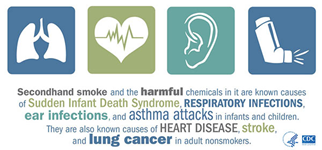
Even if you have never smoked, secondhand smoke can still cause heart disease, lung cancer, and stroke. Even brief exposure to secondhand smoke can be harmful to your heart and blood vessels.
In 2019, almost 7 million U.S. middle and high school students (about 25%) reported breathing secondhand smoke in their homes, and just over 6 million (about 23%) reported breathing secondhand smoke in vehicles.
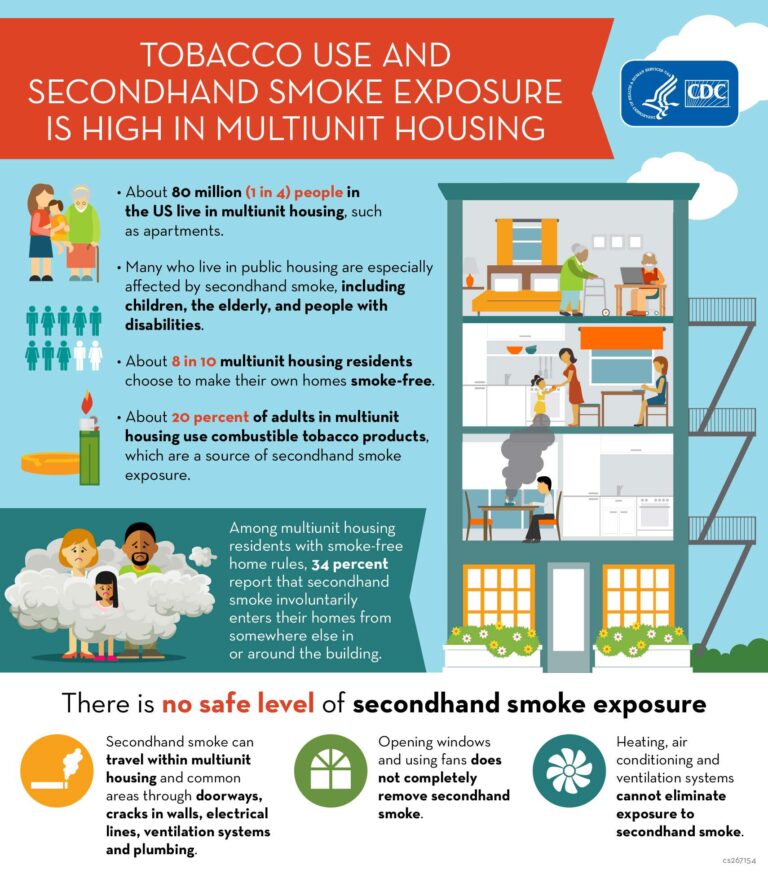
There is no safe level of exposure to secondhand smoke. Even brief exposure can cause immediate harm. Health problems caused by secondhand smoke in adults who do not smoke include heart disease, stroke, lung cancer, and adverse reproductive health effects in women, including low birth weight.
From 2017 to 2020, 24.3% of persons aged 3 years and older were currently exposed to second-hand smoke.
Infants and children are especially vulnerable to the effects of secondhand smoke
Infants exposed to secondhand smoke after birth are more likely to die from sudden infant death syndrome (SIDS) than infants who are not exposed to smoke from tobacco/nicotine products. SIDS is the leading cause of death in otherwise healthy infants.
Children who are exposed to secondhand smoke are at an increased risk for acute respiratory infections such as pneumonia and bronchitis, middle ear disease, more frequent and severe asthma, respiratory symptoms, and slowed lung growth.
Children whose parents smoke around them get more ear infections, have fluid in their ears more often, and have more operations to put in ear tubes for drainage.
Secondhand smoke can trigger an asthma attack in a child. Children with asthma who are around secondhand smoke have more severe and frequent asthma attacks. A severe asthma attack can put a child’s life in danger.
The home is the main place many children and adults breathe in secondhand smoke. To protect yourself and those around you, do not smoke or let anyone smoke in your home or car. Here are a few reasons why it is important to avoid smoking in the home:
Smoke from one cigarette can stay in a room for hours.
Opening windows and using fans, air conditioners, air purifiers, air fresheners, and ventilation systems does not get rid of secondhand smoke.
Smoking in another room, such as a bathroom, will not protect children and others from secondhand smoke. Secondhand smoke can still spread through doorways, cracks in walls, electrical lines, ventilation systems, and plumbing.
Prohibiting all tobacco use, including e-cigarettes, in the home can set a good example for young people.
Encourage family members to quit smoking.
For more information on secondhand smoke visit
https://www.cdc.gov/tobacco/secondhand-smoke/health.html https://progressreport.cancer.gov/prevention/tobacco/smoke_exposure
If you or a loved one is ready to quit tobacco or nicotine use, the following FREE resources may help you on your journey:
Quit Now Kentucky: Call 1-800-QUIT-NOW or visit www.quitnowkentucky.org
Youth can use My Life, My Quit: Text “Start My Quit” to 36072 or visit https://ky.mylifemyquit.org/en-us/
For other information or questions, call the Marshall County Health Department at 270-527-1496
Page Updated 2-27-2026